Vera Patterson · 2 September 2026
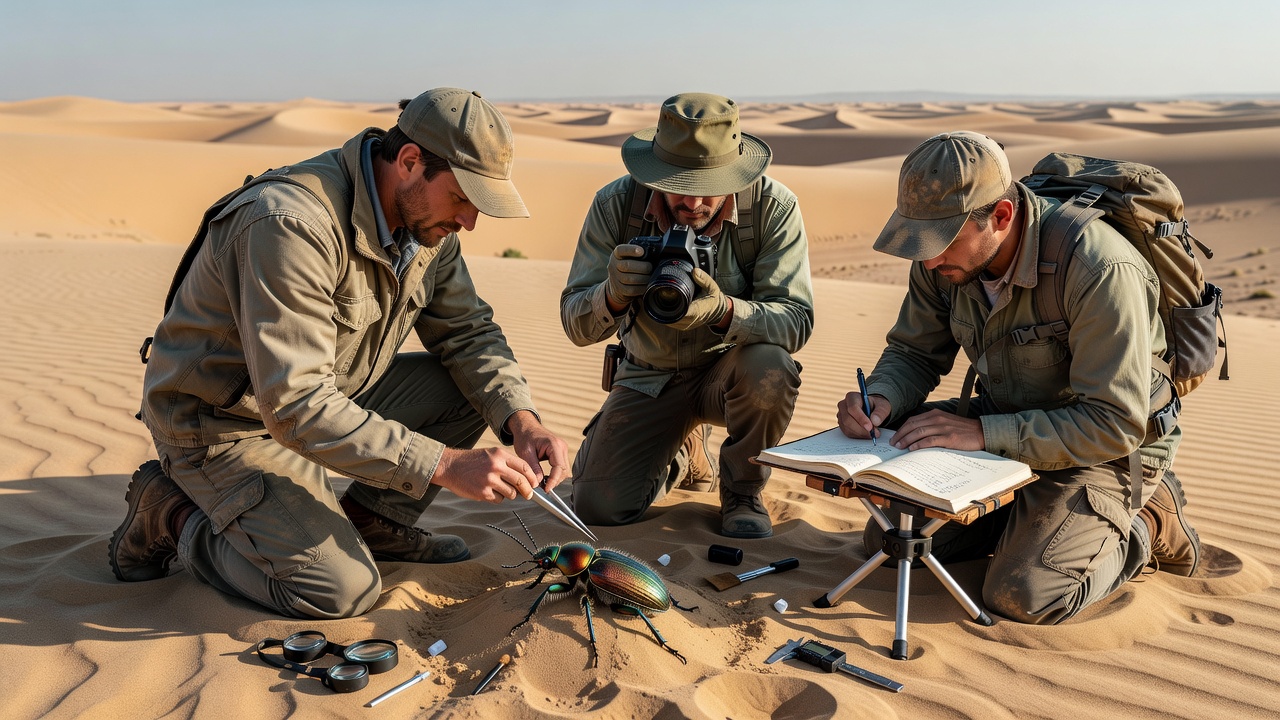
Researchers have formally described a previously unknown beetle species adapted to the mobile dunes of the Dunefield Desert. The insect, named Arenivermis dunefieldi, was identified after three years of systematic pitfall trapping and sand-sifting surveys conducted across active dune fields. Its discovery underscores the capacity of shifting sands to support specialized endemic fauna despite extreme aridity and substrate instability.
Physical Adaptations and Behavior
The beetle measures 8–11 mm in length and exhibits elongated, flattened elytra that facilitate rapid subsurface movement. Its legs bear dense fringes of setae that function as sand-swimming paddles, allowing individuals to remain buried during daytime heat. Gut-content analysis indicates a diet composed primarily of wind-deposited organic detritus and micro-arthropods. Activity peaks occur at dusk when surface temperatures drop below 35 °C, minimizing desiccation risk. Mark-recapture data suggest localized populations remain within 200 m of natal dune crests, implying limited dispersal across stable interdune corridors.
Genetic sequencing of mitochondrial COI loci confirmed distinctiveness from related taxa found in adjacent desert basins. Morphological comparisons further revealed unique setal patterns on the pronotum not observed in congeners. These traits collectively support species-level recognition under both phylogenetic and morphological species concepts.
Conservation and Habitat Implications
Population estimates derived from transect counts place adult density at approximately 12 individuals per 100 m² in active dunes, with lower numbers in stabilized margins. Because the species depends on continual sand movement for burrow maintenance, any reduction in dune mobility could threaten persistence. Ongoing monitoring will track responses to regional wind-pattern changes and potential off-road vehicle impacts. The formal cataloging provides baseline data for future biodiversity assessments and informs land-management decisions aimed at preserving dynamic dune ecosystems.