Xander Jenkins · 2 September 2026
Federal agencies have allocated new grants to support dune stabilization initiatives across the Dunefield region. The funding targets erosion control and habitat preservation in areas facing increasing wind-driven sand movement.
Funding Allocation and Project Scope
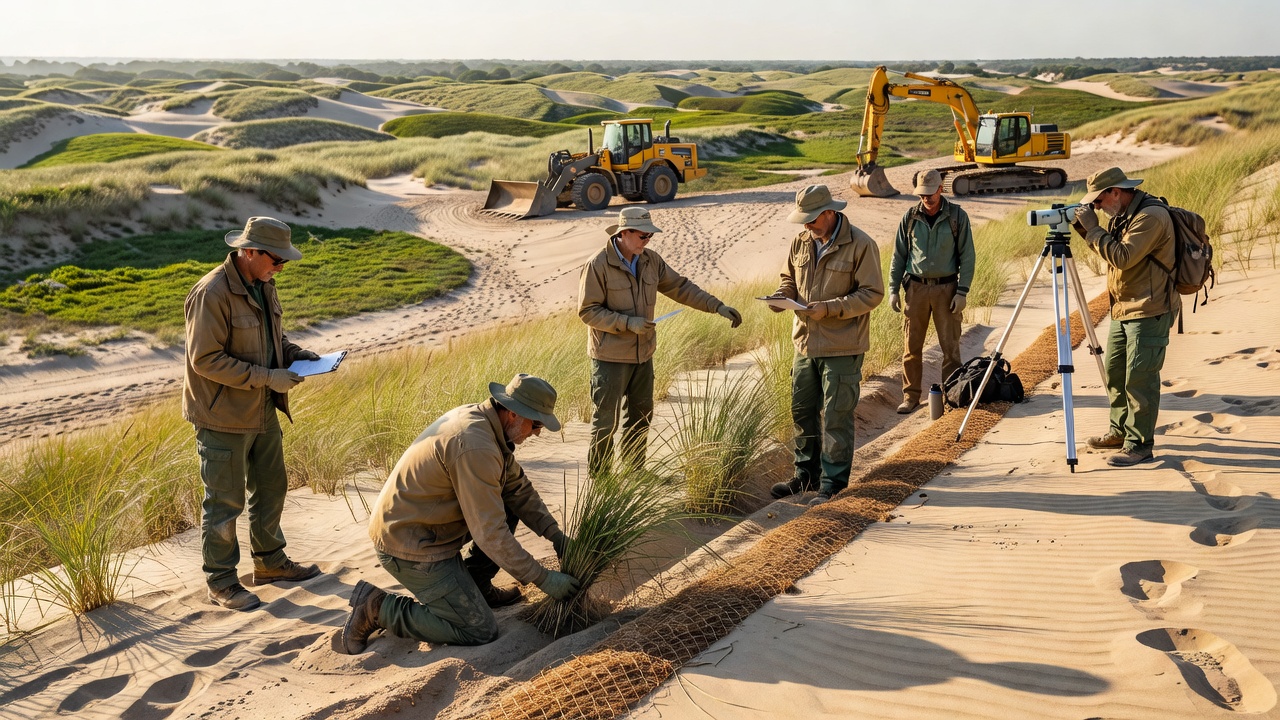
The Department of the Interior and the Bureau of Land Management jointly awarded $4.2 million through the Desert Ecosystem Restoration Program. Funds will cover installation of sand fencing, native vegetation planting, and monitoring equipment over 12,000 acres. Project leads expect work to begin in the third quarter of the current fiscal year and continue for 36 months. Local contractors will receive priority for labor and material contracts, creating an estimated 85 temporary positions. Soil scientists will track changes in dune migration rates using LiDAR surveys conducted every six months.
Previous stabilization efforts in adjacent basins showed a 40 percent reduction in sand encroachment on nearby infrastructure after similar interventions. Officials note that the new grants build on those results by expanding coverage to previously untreated corridors near State Route 95.
Environmental and Community Outcomes
Stabilized dunes are projected to protect critical habitat for the threatened Mojave fringe-toed lizard and several endemic plant species. Reduced sand deposition on agricultural lands could lower maintenance costs for irrigation systems by up to 25 percent annually. Community workshops scheduled for next month will inform residents about access restrictions during active planting phases and long-term recreational trail adjustments. Monitoring data will be published quarterly on the Dunefield Desert Reports portal to maintain transparency and support future grant applications.
Regional planners emphasize that sustained federal support remains essential as climate models predict stronger wind events in coming decades. The current grants represent the largest single investment in Dunefield dune management to date.