Freya Klein · 2 September 2026
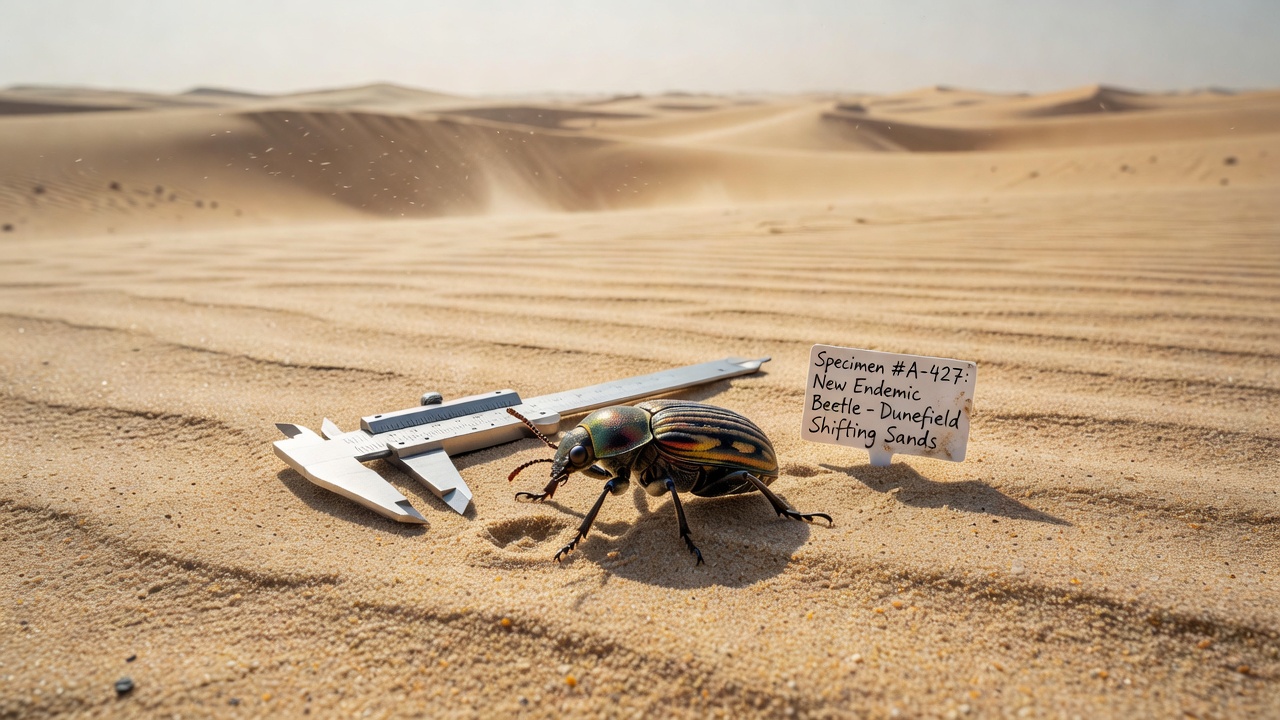
Scientists cataloged a novel endemic species thriving in the dynamic environment of the Dunefield Desert's shifting sands. This discovery underscores the rich biodiversity hidden within seemingly barren landscapes. Field researchers identified the organism during extensive surveys conducted over the past year, focusing on areas with high sand mobility.
The species in question is a diminutive beetle measuring approximately five millimeters in length. It possesses elongated hind legs adapted for rapid burrowing and a matte black coloration that provides camouflage against the sand grains. Genetic analysis confirmed its status as previously undocumented, distinguishing it from related species found in neighboring desert regions.
Discovery Process and Methodology
The cataloging effort involved deploying pitfall traps and conducting nocturnal searches using ultraviolet lights to attract specimens. Teams navigated treacherous dune slopes, often facing sandstorms that obscured visibility. Samples were collected from multiple sites to ensure representation across the species' range. Laboratory examinations included morphological measurements, DNA sequencing, and behavioral observations in simulated dune conditions. These methods revealed specialized sensory organs on the antennae that detect vibrations in the sand, aiding in predator avoidance and prey location.
Further analysis showed that the beetle's life cycle is closely tied to seasonal wind patterns, with larvae developing in stabilized sand pockets during calmer periods. Adults emerge during peak wind activity to disperse to new areas. This adaptation highlights evolutionary pressures unique to shifting sand ecosystems.
Implications for Biodiversity Studies
The presence of this endemic beetle emphasizes the need for continued exploration in remote desert locales. It may serve as an indicator species for dune health, with population fluctuations signaling changes in sand dynamics influenced by environmental factors. Conservation strategies could involve restricting off-road vehicle access to sensitive zones to prevent habitat disruption.
Ongoing research aims to map the full distribution and assess genetic diversity within populations. Collaborations with international entomologists are underway to compare findings with similar discoveries in other global deserts. Such studies contribute valuable data to understanding how life persists in extreme conditions and may inform models of ecosystem resilience. These efforts not only enrich scientific knowledge but also promote awareness of the delicate balance in desert environments worldwide.